
FIELD NOTES FROM THE WITCHING HOUR
Why we light the dark
on Halloween.
Ancient seasonal thresholds. Church calendars. Irish turnips. American front porches. And one entirely fictional little light that refused to go out.
BEGIN AT THE BEGINNINGI
A night at the
edge of winter.
Halloween did not spring from one place, one ritual, or one perfectly preserved ancient holiday. It grew in layers.
Among the influences most often discussed is Samhain, a Gaelic seasonal festival associated with the end of harvest and the beginning of winter. In later folklore, this time of year became a threshold: summer behind you, darkness ahead, the ordinary world feeling unusually close to the other one.
People gathered, shared food, tended fires, and carried stories through the longest nights. The exact practices changed across centuries and communities—but the feeling endured. Late October was a hinge in the year.
Before Halloween was a shelf of decorations, it was a season people could feel arriving.
II
How Halloween
got its name.
In the medieval Christian calendar, November 1 became All Saints’ Day—also called All Hallows. The evening before was All Hallows’ Eve. Spoken, shortened, and carried forward, “All Hallows’ Eve” became “Halloween.”
Across Britain and Ireland, customs around the season included bonfires, prayers, food offered or requested door to door, divination games, disguises, and the carving of root vegetables. These traditions were never identical everywhere. They mixed sacred observance with local mischief, remembrance, hospitality, and the old human instinct to make a game out of fear.
LIGHT
Lanterns and fires made the dark visible—and manageable.
DISGUISE
Guising and masking let ordinary people cross into another role.
REMEMBRANCE
Many customs held space for ancestors, saints, and the absent.
III
The night crosses
the Atlantic.
Irish and Scottish immigrants brought seasonal traditions with them to North America, where the celebration kept evolving. Pumpkins—native to the Americas and far easier to carve than turnips—became the glowing faces we recognize today.
By the early twentieth century, Halloween in the United States was increasingly shaped by neighborhood parties, costumes, parades, candy, and door-to-door trick-or-treating. The holiday became less locally specific and more unmistakably American: theatrical, communal, commercial, and endlessly reinvented.
That is why a modern Halloween can hold so many moods at once. It can be eerie and neighborly. Ancient-feeling and brand new. A children’s parade at dusk, then a horror movie after bedtime. The porch is bright because the night is dark.
 AN ORIGINAL HOLLOW & HEARTH FICTION
A TALE FOR AFTER MIDNIGHT
The Widow’s
Last Light
WETHERSFIELD, CONNECTICUT — OCTOBER 31, 1893
The rain began just after supper, tapping the Vale house with the patient fingernail of someone who knew they would eventually be let in.
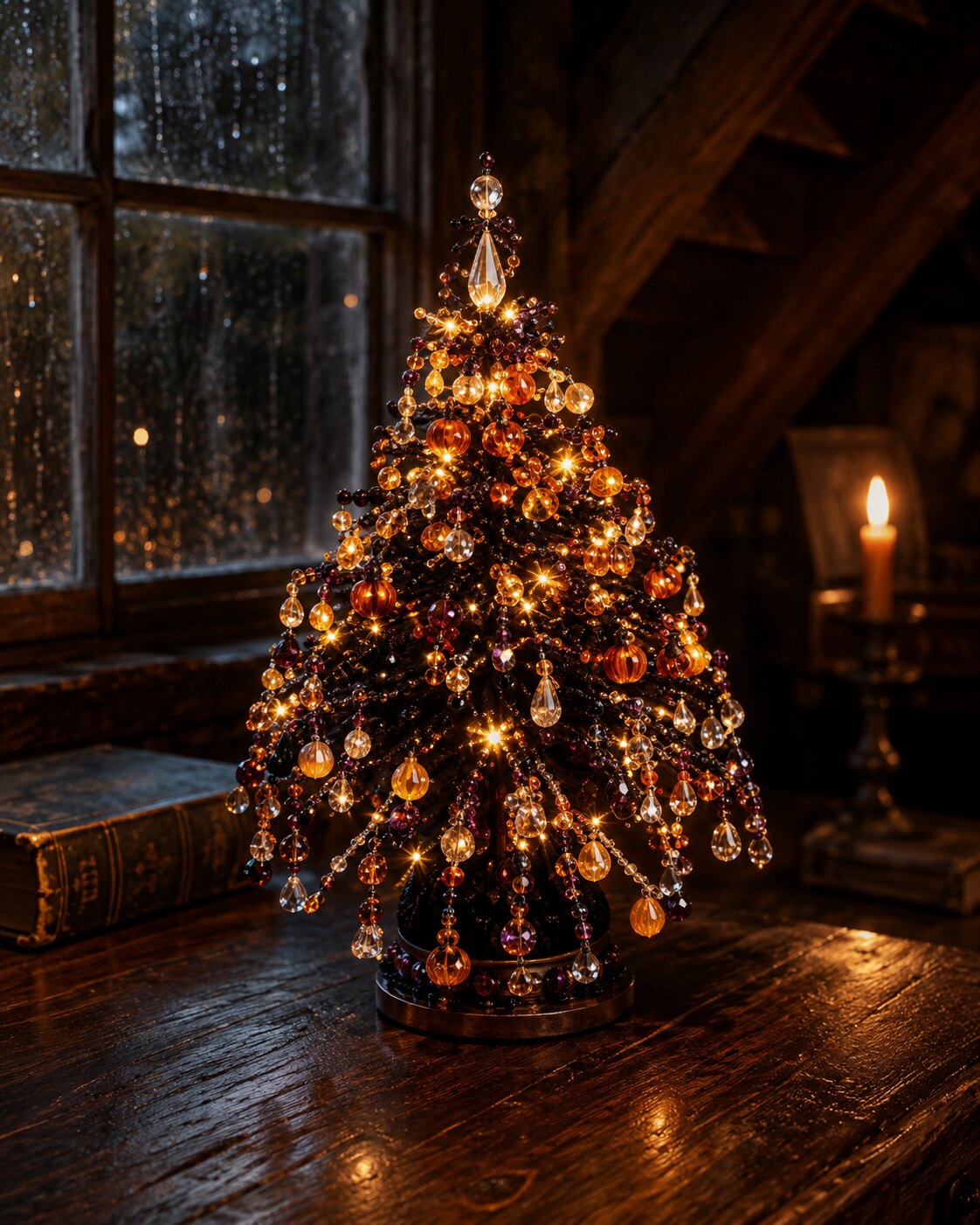
Eliza Vale did not look toward the windows. She sat beneath the attic eaves with a tray of amber glass beads, a coil of thin wire, and the final letter her husband had sent before the river took him.
“A light in every window,” he had once told her, “and I would find this house from anywhere.”
But there were no candles left. So Eliza built a tree.
She twisted the wire into branches. She threaded each bead like a frozen drop of fire. At the center she wound a tiny strand of electric lights the shopkeeper swore could not possibly work without a proper battery.
At one minute to midnight, the tree lit itself.
Not brightly. Not all at once. One bead, then another—amber, garnet, smoke—until the attic glowed like a memory deciding whether to stay.
Below her, the front door opened.
Wet footsteps crossed the hall. They paused at the bottom of the stairs.
“Thomas?” Eliza whispered.
The footsteps climbed.
The next morning, neighbors found the house locked from within. Eliza was gone. Her chair was still warm. On the worktable stood the little bead tree, dark now except for one light at its very top.
Every Halloween after, the Vale house showed a glow in the attic window. Children dared one another to knock. Adults crossed the road without admitting why.
And if someone in town was lost—truly lost, the kind no map could help—the tree lit one more branch.
Some say Eliza was waiting for her husband.
Some say she became the light that brought everyone else home.
If you make your own, switch it off before midnight.
Unless you are waiting for someone.
KEEP A LIGHT IN THE WINDOW
Build your own
dark fairytale.
The Hallowlight Tree kit includes crystal-effect beads, accessories, an illustrated guide, and warm LED lights.
MAKE MY HALLOWEEN GLOW